Tuesday, April 23, 2013

TCR Poem of the Month for April: "Chaplinesque" by Hart Crane

Hart Crane
The Committee Room offers "Chaplinesque" by Hart Crane as TCR Poem of the Month for April. Hart Crane has been called a Modern Romantic who strove to refresh the poet's kinship to the shaman and the seer. In his short career, Crane followed the tradition of Walt Whitman by attempting to capture the range of American experience in his poetry.

Born to a wealthy family in Ohio in 1899, Crane eschewed higher education to pursue what he believed was his destiny to be a poet. He moved to New York City and had his work published in small magazines. His exuberance and good looks, along with his writing, soon established him as an up and coming figure on the literary scene.

Wednesday, April 10, 2013

TCR Spotlight on Theater: Most Produced Plays in America

Walnut Street Theatre,
Philadelphia, 2013
The Committee Room takes a look at what plays are being produced at American theaters.

According to Theatre Communications Group, which includes nearly five-hundred professional, not-for-profit theaters, large and small, across the United States, the most produced play of the 2012-2013 season is Good People by David Lindsay-Abaire.

A drama peppered with biting wit, Good People is the story of an unemployed single mother from blue collar South Boston reconnecting with a high school boyfriend in the hope of finding a job. The boyfriend got out of their gritty neighborhood and is now a doctor living in an upscale suburb.

Monday, March 25, 2013

Reading and Writing of U.S. Presidents: Richard Nixon

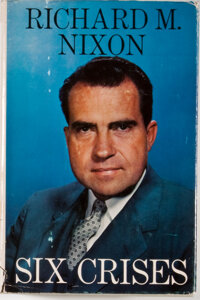
Six Crises, first edition, 1962
The Committee Room returns by popular demand to the subject of the reading and writing of U.S. Presidents. In an earlier article we discussed George Washington, John Adams, Ulysses Grant, and John F. Kennedy. Now, in observance of the centenary of his birth and the fortieth anniversary of the start of his unfinished second term we take a look at the literary record of one of the most controversial and most prolific of the American Presidents, Richard Milhous Nixon.

Richard Nixon was born on a citrus ranch in Yorba Linda, California in 1913 to a devoutly Quaker family. As a small child he was taught to read by his mother. Already knowing how to read when he entered school enabled him to skip from the first to the third grade. In his book RN: The Memoirs of Richard Nixon Nixon writes of his early life in Yorba Linda -- "After homework and chores, I often sat by the fireplace or at the kitchen table immersed in a book or magazine. We took the Los Angeles Times, the Saturday Evening Post, and the Ladies' Home Journal. Aunt Olive, my mother's youngest sister, and her husband, Oscar Marshburn, lived in nearby Whittier and subscribed to the National Geographic. Nearly every time I visited them I borrowed a copy. It was my favorite magazine."

Tuesday, March 19, 2013

TCR Story of the Month for March: "Mentos" by Holly Thompson

Holly Thompson
The Committee Room is very happy to offer "Mentos" by Holly Thompson as TCR Story of the Month for March.

"Mentos" is a superbly crafted work of flash fiction. Employing masterful focus and a light touch, Thompson packs this very short story with insight into addiction, life in a global culture, and family relationships.

Holly Thompson is the author of two young adult novels in verse: Orchards, winner of the APALA Asian/Pacific American Award for Literature, and The Language Inside, both published by Delacorte/Random House. She is also author of the novel Ash and the picture book The Wakame Gatherers. Her stories and essays have been published in magazines in Japan and the United States. She co-writes the column “Double Take” in ANA Wingspan magazine.

Tuesday, March 5, 2013

TCR Poem of the Month: "Poem [Lana Turner has collapsed!]" by Frank O'Hara

Frank O'Hara, c. 1965
(Photo by Richard O. Moore)
The Committee Room begins its TCR Poem of the Month feature with "Poem [Lana Turner has collapsed!]" by Frank O'Hara.

O'Hara was a leading figure in the New York School, a group of poets living in New York in the 1950s and 1960s who valued spontaneity and outward-looking personal expression over polished technique and tortured emotional confessions.

According to O'Hara biographer Brad Gooch in City Poet: The Life and Times of Frank O'Hara, O'Hara was inspired by a tabloid newspaper headline when he wrote "Poem [Lana Turner has collapsed!]" on a snowy evening in February 1962 while riding the Staten Island Ferry. Thirty-five years old and a poet of rising reputation, O'Hara was on his way to a reading he was to give at Staten Island's Wagner College. At the reading, O'Hara shared the newly written poem with an appreciative audience. Scheduled to read for twenty minutes, O'Hara read for an hour, much to the annoyance of his co-presenter, the somewhat older and more eminent Robert Lowell, whose poetry epitomized the confessional style that O'Hara disdained. When Lowell finally began his set he announced he would be reading for only a few minutes and facetiously apologized for not having written a poem on the spot.

Thursday, February 21, 2013

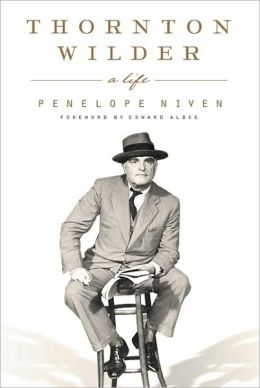
TCR Spotlight on Theater: Interview with Penelope Niven, Author of "Thornton Wilder: A Life"

Thornton Wilder: A Life by Penelope Niven is a superb new biography of the American playwright, novelist, and man of letters.

A winner of three Pulitzer Prizes and so far the only writer to earn Pulitzers in both fiction and drama, Thornton Wilder stood at the top of the American literary scene for nearly half a century. He gained prominence with his first novel The Cabala, (1926), about a young American in Rome after World War I, and soon moved into the top echelon of writers with his now classic The Bridge of San Luis Rey (1927), a slim novel that asks profound questions in its examination of the lives of a disparate group of characters killed in a bridge collapse.

Wilder's favorite genre was the theater. He enjoyed critical and commercial success with the plays The Skin of Our Teeth (1942), The Matchmaker (1955) -- which later served as the basis for the musical Hello, Dolly! -- and most famously Our Town (1938). On a nearly bare stage with the proceedings narrated by an avuncular Stage Manager character, Our Town presents the eternal cycle of life and death among ordinary people in an ordinary New England town in the early twentieth century.

Wednesday, February 13, 2013

Self-Help Books Prescribed by Doctors -- "Reading Well: Books on Prescription" program


The Committee Room turns it attention to self-help books with a look at a collaboration recently begun in England between libraries and the healthcare system. In January 2013, The Reading Agency, a non-profit supporting books, libraries, and literacy, announced the Reading Well: Books on Prescription program.

Beginning in May 2013, titles from a core-list of thirty self-help books on topics such as anxiety, chronic fatigue, depression, and binge eating will be made available in public libraries throughout England. General practitioners and other health professionals will be able to prescribe books from the list knowing that patients will have free access to the recommended titles.