Novels are often overshadowed to the point of near oblivion by successful film versions. Forrest Gump. The Silence of the Lambs. Kramer vs. Kramer. Midnight Cowboy. In the Heat of the Night. True Grit. The Graduate. Would anyone think of this as a list of novels?
Similarly,The Lost Weekend is remembered today, if it is remembered at all, as an Oscar winning 1945 film directed by Billy Wilder and starring Ray Milland as a struggling and not so young anymore writer on a harrowing, five-day drinking binge in Manhattan.
The even harder hitting novel The Lost Weekend by Charles Jackson, upon which the movie is based, was published seventy years ago this month, in January 1944. The Lost Weekend sold a half million copies in its first few years of publication, was translated into several languages, and made its author famous, at least for awhile.
Jackson and his novel have recently emerged from the shadows. Vintage Books has brought out a trade paperback edition ofThe Lost Weekend. Also, a superb biography of Jackson -- Farther and Wilder: The Lost Weekends and Literary Dreams of Charles Jackson -- by Blake Bailey was published by Alfred A. Knopf.
Showing posts with label Novelists. Show all posts
Tuesday, January 28, 2014
Tuesday, September 3, 2013
The 200 Best Novels in English Since 1950
What were the best English language novels written in the second half of the twentieth century? Writer Colm Toibin and editor/publisher Carmen Callil tackle this question in The Modern Library: A Brief Guide to the 200 Best Novels in English Since 1950.
"Enthusiasm is the driving force of this book. Its purpose is to celebrate the writers we have loved best, and to proselytize on behalf of their novels," Toibin and Callil write in the introduction.
Toibin and Callil delineate three types of novels written since 1950 -- "massively ambitious and complex" works such as William Gaddis' The Recognitions (1955) and Angela Carter's Wise Children (1991) that "take their bearings" from the early twentieth century Modernist giants James Joyce and Virginia Woolf and leave characters, dialogue, and plot "open to question;" traditional style novels, such as Anita Brookner's Friends and Family (1985) and Patrick Hamilton's The West Pier (1951), that follow a "system in which things are slowly revealed and objects in the landscape are described in some detail;" and a modernist/traditional combination, the most common style in the later twentieth century, that takes in lessons from Joyce and Woolf about language, form, voice, and tone without abandoning completely traditional narrative methods.
"Enthusiasm is the driving force of this book. Its purpose is to celebrate the writers we have loved best, and to proselytize on behalf of their novels," Toibin and Callil write in the introduction.
Toibin and Callil delineate three types of novels written since 1950 -- "massively ambitious and complex" works such as William Gaddis' The Recognitions (1955) and Angela Carter's Wise Children (1991) that "take their bearings" from the early twentieth century Modernist giants James Joyce and Virginia Woolf and leave characters, dialogue, and plot "open to question;" traditional style novels, such as Anita Brookner's Friends and Family (1985) and Patrick Hamilton's The West Pier (1951), that follow a "system in which things are slowly revealed and objects in the landscape are described in some detail;" and a modernist/traditional combination, the most common style in the later twentieth century, that takes in lessons from Joyce and Woolf about language, form, voice, and tone without abandoning completely traditional narrative methods.
Wednesday, May 15, 2013
Twelve Great American Novels (and The Great Gatsby, too)
![]() |
| The Far Side of Paradise (first edition, 1951) |
For much of the 1930s and 1940s, Fitzgerald was widely viewed as a literary curiosity noteworthy only for his vivid depictions of the Roaring Twenties. When Fitzgerald died in December 1940, a New York Times obituary carried the headline "Brilliant novelist of the Twenties; inactive recently" and noted that "the promise of his brilliant career was never fulfilled."
Thursday, February 21, 2013
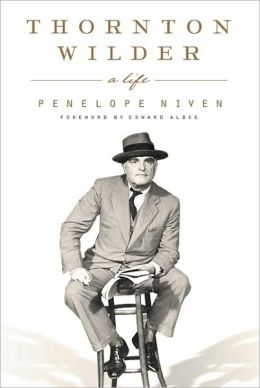
TCR Spotlight on Theater: Interview with Penelope Niven, Author of "Thornton Wilder: A Life"
Thornton Wilder: A Life by Penelope Niven is a superb new biography of the American playwright, novelist, and man of letters.
A winner of three Pulitzer Prizes and so far the only writer to earn Pulitzers in both fiction and drama, Thornton Wilder stood at the top of the American literary scene for nearly half a century. He gained prominence with his first novel The Cabala, (1926), about a young American in Rome after World War I, and soon moved into the top echelon of writers with his now classic The Bridge of San Luis Rey (1927), a slim novel that asks profound questions in its examination of the lives of a disparate group of characters killed in a bridge collapse.
Wilder's favorite genre was the theater. He enjoyed critical and commercial success with the plays The Skin of Our Teeth (1942), The Matchmaker (1955) -- which later served as the basis for the musical Hello, Dolly! -- and most famously Our Town (1938). On a nearly bare stage with the proceedings narrated by an avuncular Stage Manager character, Our Town presents the eternal cycle of life and death among ordinary people in an ordinary New England town in the early twentieth century.
A winner of three Pulitzer Prizes and so far the only writer to earn Pulitzers in both fiction and drama, Thornton Wilder stood at the top of the American literary scene for nearly half a century. He gained prominence with his first novel The Cabala, (1926), about a young American in Rome after World War I, and soon moved into the top echelon of writers with his now classic The Bridge of San Luis Rey (1927), a slim novel that asks profound questions in its examination of the lives of a disparate group of characters killed in a bridge collapse.
Wilder's favorite genre was the theater. He enjoyed critical and commercial success with the plays The Skin of Our Teeth (1942), The Matchmaker (1955) -- which later served as the basis for the musical Hello, Dolly! -- and most famously Our Town (1938). On a nearly bare stage with the proceedings narrated by an avuncular Stage Manager character, Our Town presents the eternal cycle of life and death among ordinary people in an ordinary New England town in the early twentieth century.
Subscribe to:
Posts (Atom)