Showing posts with label Actors. Show all posts

Friday, June 9, 2017

TCR on Films: Roger Moore (1927-2017), Actor and Surprisingly Busy Author

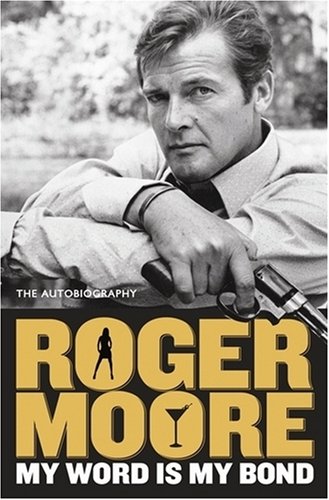
Actor Roger Moore, who died two weeks ago at age 89, became a prolific author in his last decade. Semi-retired and dividing his time between homes in Monaco and Switzerland, the octogenarian Moore turned out three books -- My Word is My Bond: A Memoir (2008), Bond on Bond: Reflections on 50 Years of James Bond Movies (2012), and One Lucky Bastard: Tales from Tinseltown (2014).

According to The Independent, shortly before his death Moore sent a manuscript for a fourth book to his publisher.

Moore writes in a droll, anecdotal manner similar to the authorial style of his old friend, David Niven, who penned the bestselling memoirs The Moon's a Balloon (1971) and Bring on the Empty Horses (1975).

In My Word is My Bond Moore offers a full life story beginning with his lower-middle class London childhood and ending with his volunteer work for UNICEF. In between, of course, is the acting career that started when he was still a teenager and cast as an extra in the British produced film Caesar and Cleopatra (1945) starring Vivien Leigh and Claude Rains. The first half of the book has lots of name dropping, especially those of long bygone British stars. Following the trajectory of Moore's career, his twelve-year stint as James Bond isn't addressed until the second half of the book.

Thursday, March 2, 2017

TCR on Film: "Unsinkable: A Memoir" by Debbie Reynolds

In tribute to the late Debbie Reynolds, one of the last stars produced by the old Hollywood studio system, The Committee Room takes a look at her memoir Unsinkable (William Morrow, 2013).

In the preface to Unsinkable, Reynolds mentions her first book, Debbie: My Life (William Morrow, 1988), written when the actress was in her fifties and, it would seem, still had a lot of living left to do.  "I can't believe how naive I was when I wrote it," Reynolds in Unsinkable says of the earlier book. She explains that at the time she was writing the first book she was in what she believed was a happy marriage to her third husband, a Virginia real estate developer named Richard Hamlett.

In Unsinkable, Reynolds offers a detailed portrait of Hamlett as a handsome, smooth-talking scoundrel who, she maintains, cold-heartedly entered into marriage with the intention of swindling her. The first third of the book is Reynolds' painstaking and angrily told account of how Hamlett's unscrupulous behavior led to the bankruptcy of her Las Vegas hotel, a venture which she hoped would provide a regular venue for her talents along with a steady income. Consequently, in Unsinkable there is much talk, perhaps too much talk, of lawyers and property deeds and promissory notes.

Friday, September 4, 2015

TCR on Television: A Salute to Two Great TV Stalwarts: Dick Van Patten and Anne Meara

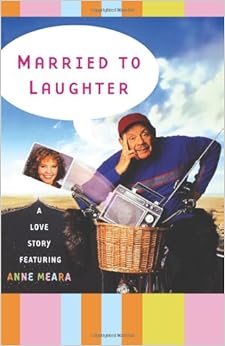
Meara plays a big part in husband Jerry
Stiller's autobiography.
In recent months, American television lost two of its most familiar faces: Dick Van Patten and Anne Meara. The careers of these hard-working performers began in television's earliest years. Their passing takes us farther away from the days of huge audience broadcast TV, when even flop shows (and both Van Patten and Meara had their share of failures) drew more viewers than the biggest hits of today.

Van Patten, who died on June 23 at age 86, is best remembered as the father on Eight is Enough, a comedy-drama that ran on ABC from 1977 to 1981. However, those four years were just a short chapter in a remarkably busy career in theater, television, and film that spanned more than seven decades.

Meara, who died on May 23 at age 85, rose to fame in the early 1960s as partner to her husband Jerry Stiller in the comedy team Stiller and Meara. However, she always considered herself an actress, not a comedienne. Meara made numerous appearances in both comedic and dramatic acting roles mainly on television but also on film and stage from the early 1950s onward.


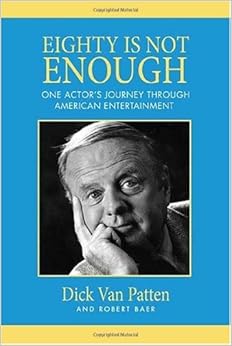
In his breezy autobiography, Eighty is Not Enough: One Actor's Journey Through American Entertainment (2009), the upbeat Van Patten shares happy memories of being one of Broadway's top juvenile actors of the 1930s and 1940s. Billed as Dickie Van Patten and sporting a great shock of blond hair, Van Patten made his Broadway debut at age seven in a play called Tapestry in Grey. While still a boy Van Patten appeared the original productions of the classics On Borrowed Time by Paul Osborn and Thornton Wilder's The Skin of Our Teeth. As a teenager Van Patten spent three years on Broadway and on tour with the legendary acting couple Alfred Lunt and Lynn Fontanne in Terence Rattigan's O Mistress Mine and became one of the many young actors over the years, including Montgomery Clift, who the Lunts took under their wing.

"I enjoyed my life as a child actor," Van Patten writes in Eighty is Not Enough, adding that his employment provided his family with a comfortable existence while others were suffering through the Depression and gave him the opportunity to work with legendary stars of the era. He points out that while many child actors, including some of those who played his children on Eight is Enough, fall prey to drug addiction and other misfortunes, such problems are also widespread among people with supposedly normal childhoods.

Tuesday, June 2, 2015

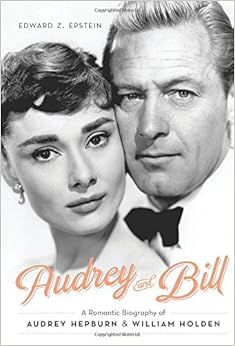
TCR on Film: An Interview with Edward Z. Epstein, author of "Audrey and Bill: A Romantic Biography of Audrey Hepburn and William Holden"

In Audrey and Bill: A Romantic Biography of Audrey Hepburn and William Holden, just published by Running Press, veteran film journalist Edward Z. Epstein creatively uses the personal relationship between Hepburn and Holden as a starting point for a wider look at how these two very big stars of the 1950s maneuvered through the changes that came to their lives and to the film industry in the 1960s and beyond.

"Both stars are charismatic screen personalities, favorites of mine, and I’d thought for a long time about writing a book on the largely untold story of their romance," Epstein, who is the author of numerous books on film subjects including Paul Newman, Clara Bow, and Marlon Brando, told The Committee Room. "As New York press contact for MCA/Universal, I worked with many people, over the years, who knew both Audrey and Bill, and who were familiar with the problems they faced and the pressures of the business they were in."

Today Hepburn is an icon recognizable even to those not so familiar with her film work. Holden, though he had a much longer career than Hepburn and his once tremendous box-office clout earned him the nickname "Golden Holden," has not been so well remembered.


Tuesday, March 17, 2015

TCR on Films -- "Life Could Be Verse: Reflections on Love, Loss, and What Really Matters" by Kirk Douglas

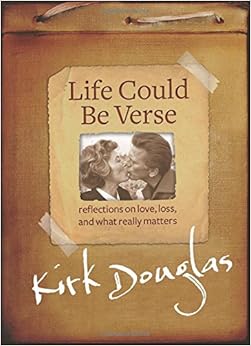
In Life Could Be Verse, a brief and often affecting volume, actor Kirk Douglas, who recently turned ninety-eight years old, shares poems he has written over the course of his long life and recounts the experiences that inspired the verses.

Kirk wrote his first poem -- about a sailing ship, though he had never seen the ocean -- for an English class assignment as a high school student in upstate New York back when he was still Issur Danielovitch, the child of impoverished Russian Jewish immigrants. He discovered that versifying helped him better understand his thoughts. "Throughout my life I have written poems that express my true feelings," Kirk explains in the book's acknowledgments.

The poems are simple but perceptive reflections set in singsong rhyme and might be called wise doggerel. Here are the opening lines from "Luck" -- They call it 'luck'/It can't be taught/It can't be borrowed/It can't be bought'. Kirk's movie stardom, though discussed in the book, takes a back seat to his roles of son, husband, father, and grandfather.

.

Thursday, September 11, 2014

In Honor of the 75th anniversary of 'Gone with the Wind' -- An Interview with Kendra Bean, author of "Vivien Leigh: An Intimate Portrait"

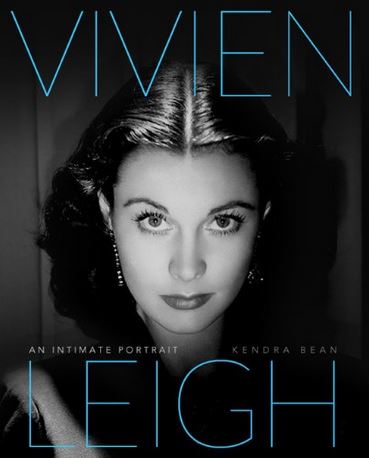
Vivien Leigh: An Intimate Portrait by Kendra Bean.
This autumn marks the seventy-fifth anniversary of the release of what is by most estimates the most popular movie of all time -- producer David O. Selznick's lavish screen version of Margaret Mitchell's bestselling Civil War saga Gone with the Wind.

At the center of this immortal film is the performance of Vivien Leigh as the scheming Southern belle Scarlett O'Hara. While it may be possible to imagine another actress as Scarlett, it is difficult to see Gone with the Wind achieving such tremendous success if Leigh had not been cast. Leigh's remarkable ability to convey steely determination underscored with trembling fragility is an essential element. Even in the capable hands of Katharine Hepburn or Bette Davis, both of whom were among the many actresses who wanted to play Scarlett, Selznick's grandiose production may have come down to us as an overblown, dated melodrama.

As Kendra Bean shows in her excellent new book Vivien Leigh: An Intimate Portrait (Running Press) as brilliant as Leigh was as Scarlett, there was far more to this English beauty than that one role. "Vivien is like the gift that keeps on giving. There are so many angles to explore and new information is always coming out of the woodwork," Bean told The Committee Room.

There have been major biographies of Leigh by Anne Edwards (1977), Alexander Walker (1987), and Hugo Vickers (1989). Bean, a young American film historian based in London, represents a new generation of film scholars. She told TCR that she was drawn to write about Leigh, who died from a badly treated case of tuberculosis at age fifty-three in 1967, "because she’s interesting, often misunderstood, and nothing I’d read about her before seemed to satisfy my curiosity about her life or her work."

Bean is the first major Leigh biographer to have access to the papers of the actor Laurence Olivier, acquired by the British Library in 2000. Leigh and Olivier were married for twenty years before divorcing in 1960.

Monday, August 25, 2014

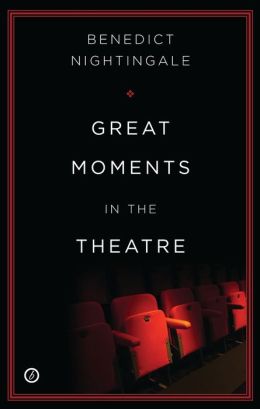
TCR Spotlight on Theater: "Great Moments in the Theatre" by Benedict Nightingale

"Drama critics come in all kinds, besides, of course, good and bad. There are those who regurgitate the plot and those who gallop off on hobby-horses. There are those with sound ideas but no style; those with impressive styles but no taste...Then there are the really good ones, like Britain’s Benedict Nightingale, whose song should be heard far beyond Berkeley Square," writes John Simon in The Weekly Standard.

Benedict Nightingale reviewed plays for the Times (London) for twenty years before retiring in 2010. Prior to joining the Times he spent nearly as long a period as theater critic for The New Statesman. In between these lengthy stints he came stateside to write for the New York Times. Nightingale began his career as a drama critic while still a teenager with a review of a local production in a suburban London newspaper and earned his stripes as a professional critic covering regional theater in the North of England for The Guardian.

Nightingale has used his vast theatergoing experience and knowledge of theater history to write Great Moments in the Theatre (recently published by Oberon Books). Behind the prosaic title is a lively look at more than one-hundred significant theater productions through the centuries. Understanding that here today, gone forever tomorrow temporariness is part of the magic of theater but also its biggest weakness, Nightingale doesn't simply talk about these great moments; he places the reader in the audience.