Friday, September 26, 2014

"Vanessa: The Life of Vanessa Redgrave" (Interview with biographer Dan Callahan)

At the opening of his superb new biography Vanessa: The Life of Vanessa Redgrave, author Dan Callahan takes readers back to 1997 when he was a drama student in New York. From a discount-price, obstructed view seat the young Callahan watched the great Vanessa Redgrave as Cleopatra in Shakespeare's Antony and Cleopatra. At the end of the performance, a matinee at the Public Theater, Redgrave solemnly informed the audience that she had just received word of the death of Fred Zinnemann who had directed her Oscar winning performance in Julia two decades earlier. Redgrave praised Zinnemann's Western film classic High Noon, citing it as a brave statement against the obsessive anti-Communism that pervaded American society in the early 1950s. Then, in her soft British accent, Redgrave astonished the audience by launching into a rendition of the theme to High Noon, a twangy ballad ("Do not forsake me, oh my darling!...") originally sung by Tex Ritter.

The crowd drifted out of the theater as Redgrave continued through the verses of the song but Callahan was transfixed. Nearly twenty years later, his fascination with Redgrave has not diminished.

"I just can’t get enough of watching her. I think that there is something very special going on when she acts, and I wanted to celebrate that," Callahan told The Committee Room.

Wednesday, September 17, 2014

TCR Remembers Penelope Niven, author of books on Thornton Wilder and James Earl Jones

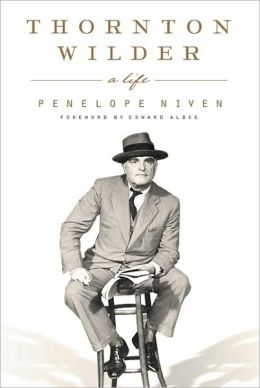
Thornton Wilder: A Life
by Penelope Niven
The Committee Room notes with sadness the death of Penelope Niven, biographer of playwright and novelist Thornton Wilder (Thornton Wilder: A Life). Niven died unexpectedly on August 28, 2014. At the time of her death, Niven was working on further Wilder projects, including a book titled Wilder on Writing.

In early 2013, Niven generously gave an engaging and in-depth interview to TCR in regard to the recently published Thornton Wilder: A Life.

Kirkus Reviews called Thornton Wilder: A Life "satisfying and insightful...a perceptive, indispensable portrait of a productive and restlessly intellectual life" and the Boston Globe praised it as "a sweeping look into the life of a man who left an indelible mark on the American theater...a vital work of scholarship."

Thursday, September 11, 2014

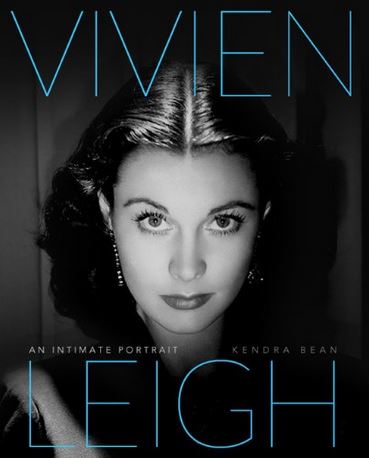
In Honor of the 75th anniversary of 'Gone with the Wind' -- An Interview with Kendra Bean, author of "Vivien Leigh: An Intimate Portrait"

Vivien Leigh: An Intimate Portrait by Kendra Bean.
This autumn marks the seventy-fifth anniversary of the release of what is by most estimates the most popular movie of all time -- producer David O. Selznick's lavish screen version of Margaret Mitchell's bestselling Civil War saga Gone with the Wind.

At the center of this immortal film is the performance of Vivien Leigh as the scheming Southern belle Scarlett O'Hara. While it may be possible to imagine another actress as Scarlett, it is difficult to see Gone with the Wind achieving such tremendous success if Leigh had not been cast. Leigh's remarkable ability to convey steely determination underscored with trembling fragility is an essential element. Even in the capable hands of Katharine Hepburn or Bette Davis, both of whom were among the many actresses who wanted to play Scarlett, Selznick's grandiose production may have come down to us as an overblown, dated melodrama.

As Kendra Bean shows in her excellent new book Vivien Leigh: An Intimate Portrait (Running Press) as brilliant as Leigh was as Scarlett, there was far more to this English beauty than that one role. "Vivien is like the gift that keeps on giving. There are so many angles to explore and new information is always coming out of the woodwork," Bean told The Committee Room.

There have been major biographies of Leigh by Anne Edwards (1977), Alexander Walker (1987), and Hugo Vickers (1989). Bean, a young American film historian based in London, represents a new generation of film scholars. She told TCR that she was drawn to write about Leigh, who died from a badly treated case of tuberculosis at age fifty-three in 1967, "because she’s interesting, often misunderstood, and nothing I’d read about her before seemed to satisfy my curiosity about her life or her work."

Bean is the first major Leigh biographer to have access to the papers of the actor Laurence Olivier, acquired by the British Library in 2000. Leigh and Olivier were married for twenty years before divorcing in 1960.

Wednesday, September 10, 2014

The Committee Room's New Focus: Film, Theater, and Television

The Committee Room is pleased to announce that books pertaining to film, theater, and television are now our focus. This isn't entirely new ground for us. TCR's original subject -- the world of literature in general -- included discussion of writing done for and about the stage and screen. Articles on these subjects proved to be some of our most popular offerings.

Below are links to some of the articles on film, theater, and television that we have already published.


TCR Spotlight on Theater: Great Moments in Theatre by Benedict Nightingale


TCR Recommends: The New Biographical Dictionary of Film (Sixth Edition) by David Thomson


Writing for Television: An Interview with Jennifer Keishin Armstrong, author of Mary and Lou and Rhoda and Ted and All the Brilliant Minds Who Made 'The Mary Tyler Moore Show' a Classic


Monday, August 25, 2014

TCR Spotlight on Theater: "Great Moments in the Theatre" by Benedict Nightingale

"Drama critics come in all kinds, besides, of course, good and bad. There are those who regurgitate the plot and those who gallop off on hobby-horses. There are those with sound ideas but no style; those with impressive styles but no taste...Then there are the really good ones, like Britain’s Benedict Nightingale, whose song should be heard far beyond Berkeley Square," writes John Simon in The Weekly Standard.

Benedict Nightingale reviewed plays for the Times (London) for twenty years before retiring in 2010. Prior to joining the Times he spent nearly as long a period as theater critic for The New Statesman. In between these lengthy stints he came stateside to write for the New York Times. Nightingale began his career as a drama critic while still a teenager with a review of a local production in a suburban London newspaper and earned his stripes as a professional critic covering regional theater in the North of England for The Guardian.

Nightingale has used his vast theatergoing experience and knowledge of theater history to write Great Moments in the Theatre (recently published by Oberon Books). Behind the prosaic title is a lively look at more than one-hundred significant theater productions through the centuries. Understanding that here today, gone forever tomorrow temporariness is part of the magic of theater but also its biggest weakness, Nightingale doesn't simply talk about these great moments; he places the reader in the audience.

Monday, August 11, 2014

TCR Great Essays (#2): "How I Lost My Pen-Pal; or, Toward a Luddite Manifesto" by John Crutchfield

Writer and theater artist John Crutchfield
"In the age of e-mail and text-messaging, of Twitter and Facebook and their spin-offs, and of whatever has already come next that I don’t yet know about, hand-written letters have become a bit like dropping in on your neighbors unannounced: the idea sounds wholesome and warm and humane in a Leave It To Beaver kind of way, but the reality freaks people out," writes John Crutchfield in "How I Lost My Pen-Pal: or, Toward a Luddite Manifesto."

In this superb essay, Crutchfield recalls how his correspondence with a young woman he met at a theater festival abruptly ended after he shifted his side of the exchanges from e-mail to paper and pen. He uses this experience as a starting point from which he examines, with great insight and a generous amount of wit, the vast differences between communicating electronically and sending a letter.

"[I]f scary old Marshall McLuhan is right,and the medium really is the message, then writing someone a letter, regardless of its content, carries the meta-communicative meaning of: 'I am a real person, and you are a real person to me.' An email or text-message, by contrast, because of its digital and hence abstract form, says only, 'I am language,'" writes Crutchfield.

Wednesday, July 30, 2014

TCR Story of the Month for July: "Readers and Writers" by Ryan Boudinot

Ryan Boudinot
The Committee Room proudly offers "Readers and Writers" by Ryan Boudinot as TCR Story of the Month for July. In this superb work of magic realism, a man reading on his daily bus commute strikes up a conversation with another man, a stranger, who happens to be reading the same book. Ensuing events raise fascinating questions of identity and life's purpose.

TCR Story of the Month highlights an outstanding work of short fiction published online within the preceding twelve months.

Ryan Boudinot is Executive Director of Seattle City of Literature. He's the author of the novels Blueprints of the Afterlife and Misconception and the story collection The Littlest Hitler.