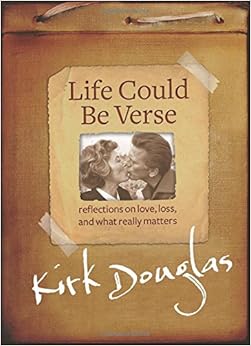
In Life Could Be Verse, a brief and often affecting volume, actor Kirk Douglas, who recently turned ninety-eight years old, shares poems he has written over the course of his long life and recounts the experiences that inspired the verses.
Kirk wrote his first poem -- about a sailing ship, though he had never seen the ocean -- for an English class assignment as a high school student in upstate New York back when he was still Issur Danielovitch, the child of impoverished Russian Jewish immigrants. He discovered that versifying helped him better understand his thoughts. "Throughout my life I have written poems that express my true feelings," Kirk explains in the book's acknowledgments.
The poems are simple but perceptive reflections set in singsong rhyme and might be called wise doggerel. Here are the opening lines from "Luck" -- They call it 'luck'/It can't be taught/It can't be borrowed/It can't be bought'. Kirk's movie stardom, though discussed in the book, takes a back seat to his roles of son, husband, father, and grandfather.
.
Tuesday, March 17, 2015
Tuesday, February 10, 2015
TCR on Films: "Watch Me: A Memoir" by Anjelica Huston
In the recently published Watch Me: A Memoir, actress and sometime director Anjelica Huston picks up where she left off in her first book, A Story Lately Told: Coming of Age in Ireland, London and New York (discussed in TCR in April 2014).
At the start of this second volume Huston is in her early twenties and has just arrived in Los Angeles. She has been a successful fashion model in Europe and New York but is eager to commence a new life in sunny SoCal after finally extrapolating herself from a difficult relationship with a mentally ill photographer old enough to be her father.
Anjelica is a new girl in town but, being the daughter of legendary film director and bon vivant John Huston, she is an extremely well-connected one. It isn't long before she meets rising star Jack Nicholson and they begin a lengthy reign as Hollywood's coolest couple. Woody Allen immortalized their partnership in Annie Hall in which Annie's acceptance by the in-crowd is represented by her being invited to a party at Jack and Anjelica's.
Jack and Anjelica are an unequal pair. Nicholson essentially replaces John Huston as the charismatic, energetic and famous man dominating over Anjelica's life. As Jack ascends to superstardom in Chinatown, One Flew Over the Cuckoo's Nest, and The Shining, Anjelica hangs around and smokes -- sometimes on Jack's movie locations, sometimes back home at Jack's house on Mulholland, sometimes at the homes of friends in Paris, London, New York, and Aspen.
At the start of this second volume Huston is in her early twenties and has just arrived in Los Angeles. She has been a successful fashion model in Europe and New York but is eager to commence a new life in sunny SoCal after finally extrapolating herself from a difficult relationship with a mentally ill photographer old enough to be her father.
Anjelica is a new girl in town but, being the daughter of legendary film director and bon vivant John Huston, she is an extremely well-connected one. It isn't long before she meets rising star Jack Nicholson and they begin a lengthy reign as Hollywood's coolest couple. Woody Allen immortalized their partnership in Annie Hall in which Annie's acceptance by the in-crowd is represented by her being invited to a party at Jack and Anjelica's.
Jack and Anjelica are an unequal pair. Nicholson essentially replaces John Huston as the charismatic, energetic and famous man dominating over Anjelica's life. As Jack ascends to superstardom in Chinatown, One Flew Over the Cuckoo's Nest, and The Shining, Anjelica hangs around and smokes -- sometimes on Jack's movie locations, sometimes back home at Jack's house on Mulholland, sometimes at the homes of friends in Paris, London, New York, and Aspen.
Thursday, October 16, 2014
TCR on Broadway: Interview with Author Peter Filichia on Broadway Musicals That Did Not Win the Tony Award
In the recently published Strippers, Showgirls, and Sharks: A Very Opinionated History of the Broadway Musicals That Did Not Win the Tony Award author and theater critic Peter Filichia takes a vibrant and extremely well-informed look into why so many classic shows failed to win Broadway's biggest prize. The book's title refers to three especially admired non-winners -- Gypsy (strippers), Follies (showgirls) and West Side Story (Sharks, a street gang).
The Tony Awards are given out by the American Theatre Wing, a service organization founded during World War II to oversee Broadway's contribution to the war effort. The Wing ran the famous Stage Door Canteen. After the war, the Wing remained in existence, shifting its mission to supporting the theater generally and bringing theater resources to communities. The Tony Awards -- named in honor of the Wing's co-founder, director and actress Antoinette Perry -- began in 1947. The first awards ceremony was a relatively modest affair in a hotel ballroom. Only a handful awards, many of them honorary, were presented.
Friday, September 26, 2014
"Vanessa: The Life of Vanessa Redgrave" (Interview with biographer Dan Callahan)
At the opening of his superb new biography Vanessa: The Life of Vanessa Redgrave, author Dan Callahan takes readers back to 1997 when he was a drama student in New York. From a discount-price, obstructed view seat the young Callahan watched the great Vanessa Redgrave as Cleopatra in Shakespeare's Antony and Cleopatra. At the end of the performance, a matinee at the Public Theater, Redgrave solemnly informed the audience that she had just received word of the death of Fred Zinnemann who had directed her Oscar winning performance in Julia two decades earlier. Redgrave praised Zinnemann's Western film classic High Noon, citing it as a brave statement against the obsessive anti-Communism that pervaded American society in the early 1950s. Then, in her soft British accent, Redgrave astonished the audience by launching into a rendition of the theme to High Noon, a twangy ballad ("Do not forsake me, oh my darling!...") originally sung by Tex Ritter.
The crowd drifted out of the theater as Redgrave continued through the verses of the song but Callahan was transfixed. Nearly twenty years later, his fascination with Redgrave has not diminished.
"I just can’t get enough of watching her. I think that there is something very special going on when she acts, and I wanted to celebrate that," Callahan told The Committee Room.
The crowd drifted out of the theater as Redgrave continued through the verses of the song but Callahan was transfixed. Nearly twenty years later, his fascination with Redgrave has not diminished.
"I just can’t get enough of watching her. I think that there is something very special going on when she acts, and I wanted to celebrate that," Callahan told The Committee Room.
Wednesday, September 17, 2014
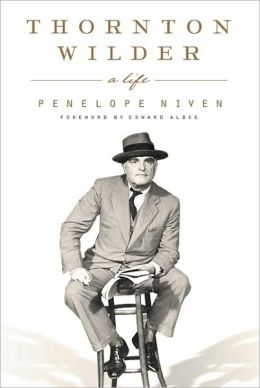
TCR Remembers Penelope Niven, author of books on Thornton Wilder and James Earl Jones
| Thornton Wilder: A Life by Penelope Niven |
In early 2013, Niven generously gave an engaging and in-depth interview to TCR in regard to the recently published Thornton Wilder: A Life.
Kirkus Reviews called Thornton Wilder: A Life "satisfying and insightful...a perceptive, indispensable portrait of a productive and restlessly intellectual life" and the Boston Globe praised it as "a sweeping look into the life of a man who left an indelible mark on the American theater...a vital work of scholarship."
Thursday, September 11, 2014
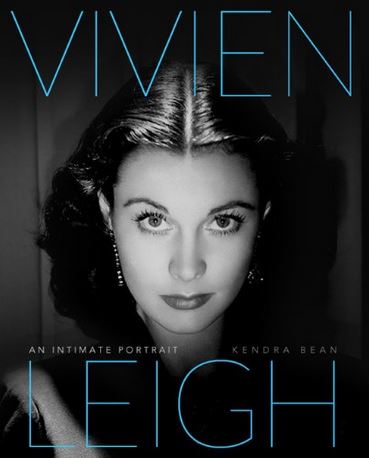
In Honor of the 75th anniversary of 'Gone with the Wind' -- An Interview with Kendra Bean, author of "Vivien Leigh: An Intimate Portrait"
![]() |
| Vivien Leigh: An Intimate Portrait by Kendra Bean. |
At the center of this immortal film is the performance of Vivien Leigh as the scheming Southern belle Scarlett O'Hara. While it may be possible to imagine another actress as Scarlett, it is difficult to see Gone with the Wind achieving such tremendous success if Leigh had not been cast. Leigh's remarkable ability to convey steely determination underscored with trembling fragility is an essential element. Even in the capable hands of Katharine Hepburn or Bette Davis, both of whom were among the many actresses who wanted to play Scarlett, Selznick's grandiose production may have come down to us as an overblown, dated melodrama.
There have been major biographies of Leigh by Anne Edwards (1977), Alexander Walker (1987), and Hugo Vickers (1989). Bean, a young American film historian based in London, represents a new generation of film scholars. She told TCR that she was drawn to write about Leigh, who died from a badly treated case of tuberculosis at age fifty-three in 1967, "because she’s interesting, often misunderstood, and nothing I’d read about her before seemed to satisfy my curiosity about her life or her work."
Bean is the first major Leigh biographer to have access to the papers of the actor Laurence Olivier, acquired by the British Library in 2000. Leigh and Olivier were married for twenty years before divorcing in 1960.
Wednesday, September 10, 2014
The Committee Room's New Focus: Film, Theater, and Television
Below are links to some of the articles on film, theater, and television that we have already published.
TCR Spotlight on Theater: Great Moments in Theatre by Benedict Nightingale
Writing for Television: An Interview with Jennifer Keishin Armstrong, author of Mary and Lou and Rhoda and Ted and All the Brilliant Minds Who Made 'The Mary Tyler Moore Show' a Classic
Subscribe to:
Posts (Atom)