
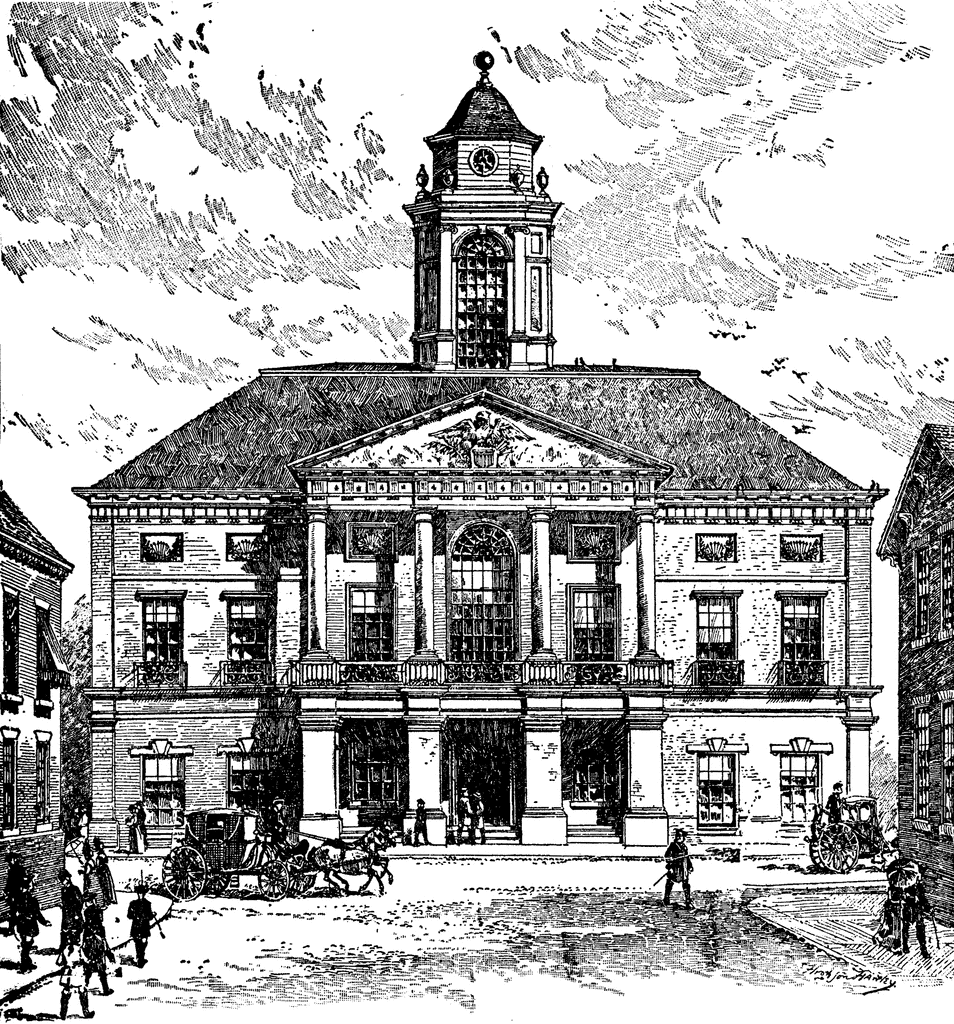
 |
| Federal Hall, New York |
In 1789, when the U.S. capital was New York City, President George Washington, famed for never telling a lie, borrowed a volume of transcriptions of British House of Commons debate and The Law of Nations by Swiss philosopher and legal scholar Emerich de Vattel from the New York Society Library. He never returned them. The library and the national government were both housed in Federal Hall in Lower Manhattan. Washington's overdue books became known to the library in the 1930s when a detailed "charging ledger" covering 1789 to 1792 was discovered in a trash pile in the library's basement.
In more recent years a conservation project on the ledger brought the missing books to the attention of the New York Daily News which published a brief article on Washington's debt to the library. In 2010, the Mount Vernon Estate and Gardens, which could not locate the borrowed books in its own collection, settled Washington's account at least in part by purchasing a copy of the same edition of The Law of Nations for $12,000 and giving it to the Society Library.
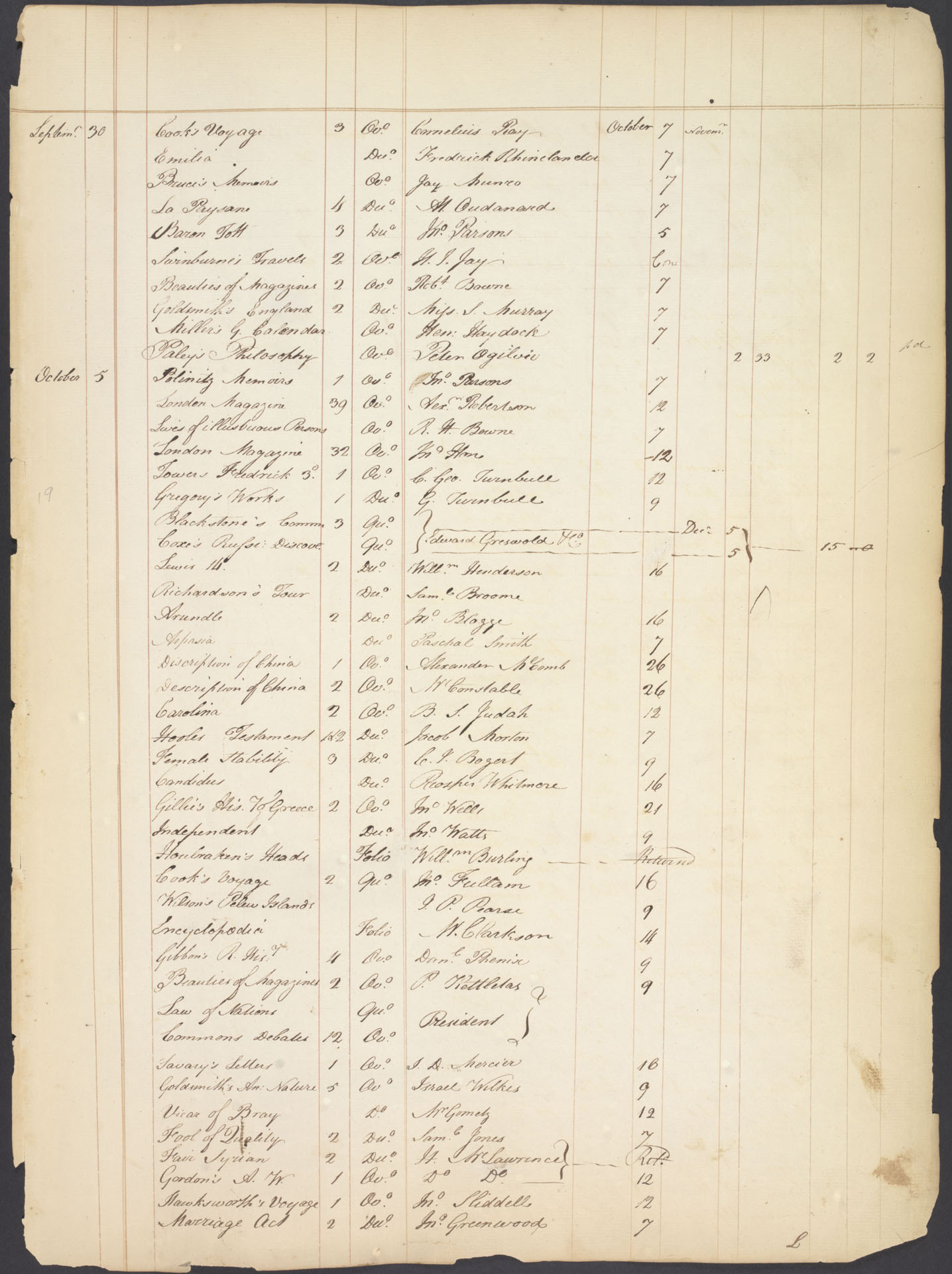 |
| Charging Ledger (New York Society Library) |
John Adams, serving as Washington's Vice President, borrowed a volume of Elements of Criticism by Scottish Enlightenment philosopher and jurist Lord Kames from the New York Society Library. Adams returned it Despite having the Society Library's collection available to him Adams in 1789 wrote to his wife Abigail in Massachusetts to send him items by Hume, Johnson, Priestley, Livy, Tacitus, Cicero and Plutarch from his personal library. Adams knew Latin and Greek believed that knowledge of the classics was and should remain the mark of a learned man. He especially liked Cicero's essay on growing old, De Senectute, and turned to it throughout his life. Apart from the classics, Adams' favorites were Shakespeare, Swift, and Cervantes. "On board all day, reading Don Quixote," is the entry in Adams' diary for May 18, 1779 while he waited in Nantes, France to sail back to America.

