Thursday, May 31, 2012

TCR Story of the Month for May: "I spent the summer gazing at the clouds" by Tony Rauch


Tony Rauch
The Committee Room is pleased to present "I spent the summer gazing at the clouds (the bubble)" by Tony Rauch as the TCR Story of the Month for May.

A brief and highly imaginative story that is widely open to interpretation, "I spent the summer gazing at the clouds (the bubble)," begins with a young man contentedly lying on a hillside watching the clouds drift by. His peace is disturbed by the arrival of a bubble floating down from the sky and bearing what seems to be a middle aged accountant.

"If William Burroughs and Garrison Keillor had a love child in a parallel universe, it would have to be Tony Rauch," wrote author Jonis Agee.

Rauch, who lives in Minneapolis, has three books of short stories published – I’m right here (Spout Press), laredo (Eraserhead Press), and eyeballs growing all over me . . . again (Eraserhead Press).  His new story collection, as I floated in the jar, which includes a slightly altered version of "I spent the summer gazing at the clouds," is forthcoming in 2012.

Tuesday, May 29, 2012

TCR Literary Journal Series: African American Review

The Committee Room continues its Literary Journal Series with a look at the African American Review.

For nearly fifty years, the African American Review and its predecessors have published groundbreaking articles on the African American contribution to a variety of literary fields including science fiction, theater, children's literature, and literary theory in addition to offering contemporary fiction and poetry.

Houston A. Baker, writer, critic, and former president of the Modern Language Association, has called the African American Review "vibrant and invaluable" and a "foremost influence" within African American scholarship.

African American Review traces its roots to the Negro American Literature Forum, a newsletter-like publication founded in 1967 at Indiana State University and aimed at school teachers and college professors eager to introduce students to African American texts. Despite its modest format, Negro American Literature Forum quickly began attracting contributions from leading figures on the African American cultural scene including poet/novelist/librarian Arna Bontemps, scholar/educator Richard Barksdale, and film historian Thomas Cripps.  In 1976, Negro American Literature Forum updated its name to Black American Literature Forum and strengthened its commitment to presenting scholarly, theory-based material.  In 1983, the Modern Language Association's Division on Black American Literature and Culture named Black American Literature Forum the division's official publication.  In 1992, Black American Literature Forum changed its name to African American Review, a more encompassing title that reflects its goals of reaching a wider audience and making a broader cultural impact.

Wednesday, May 23, 2012

30 Years Ago: Fonda, Ludlum, and Jakes

Thirty years ago -- May 1982 -- these books topped the New York Times Bestseller Lists --


Non-Fiction: Jane Fonda's Workout Book by Jane Fonda (Simon & Shuster, $17.95)


Fiction: The Parsifal Mosaic by Robert Ludlum (Random House, $15.95)


By year's end Ludlum's Parsifal had edged out Fonda's Workout, the non-fiction champ, as the biggest selling book of 1982.


The Parsifal Mosaic was so popular it sold almost twice as many copies as the second bestselling fiction title, North and South by John Jakes.


Robert Ludlum died in 2001 at age 73. Before his death, he arranged for his authorial brand to continue after he was gone. The Sigma Protocol (2001) was the last book written entirely by Ludlum. Since then many authors have contributed to "Robert Ludlum" novels. Ludlum's friend, noted fantasy and thriller author Eric Van Lustbader, has continued the popular Jason Bourne series.


Jane Fonda, now 74, came out with a self-help book Prime Time: Love, Health, Sex, Fitness, Friendship, Spirit -- Making the Most of All of Your Life in 2011 and her autobiography My Life So Far in 2005.  She blogs regularly on her website Janefonda.com.


John Jakes, now 80, has published popular historical novels since the mid-1970s when the first installments of his Kent Family Chronicles (The Bastard, The Rebels, and The Seekers) were bestsellers.  His most recent works include The Gods of Newport (2006), about the Rhode Island resort in the 1890s, and Savannah or a Gift for Mrs. Lincoln (2004), a Civil War Christmas story set during Sherman's march to the sea.

Friday, May 18, 2012

Update on TCR Story of the Month Authors

Jean Ryan
Jean Ryan, whose story "Paradise" was TCR Story of the Month for March 2012, reads one of her latest stories, "Migration," an honestly observed and richly detailed look at how difficult it can be for humans to find their right place in the world, in the May issue of the audio publication The Drum Literary Magazine.  

To hear Jean read "Migration," click here


Gene Twaronite
Gene Twaronite, whose story "The Woman Who Came to Lunch" was TCR Story of the Month for January 2012, has come out with a new novel My Vacation in Hell, a darkly comic young adult novel about a teenage boy who, inspired by a reading of Dante's Inferno, creates his own Hell populated with the people who have wronged him over the years. 

For more information on My Vacation in Hell click here

Wednesday, May 16, 2012

Bestseller List Revisited -- 1972: The Friends of Eddie Coyle

2010 edition
The Committee Room looks back forty years to the spring of 1972 when The Friends of Eddie Coyle, a slim novel by young Boston lawyer George V. Higgins, found its way onto the New York Times Bestseller List.  Topping the list that spring were The Winds of War by Herman Wouk and Wheels by Arthur Hailey, both mammoth tomes written by aging titans.

George V. Higgins, a Boston College and Stanford University educated writer turned lawyer turned back to writer, wrote several unpublished novels before getting The Friends of Eddie Coyle accepted at Alfred A. Knopf. Part of the novel's sixth chapter had appeared in a different form under the title "Dillon Explained That He Was Frightened" in the North American Review (Fall 1970).

In his introduction to its 2010 Picador edition, Boston novelist Dennis Lehane calls Eddie Coyle "the game-changing crime novel of the last fifty years.  It is also quite possibly one of the four or five best crime novels ever written.  It casts such a long shadow that all of us who toil in the genre known as American noir do so in its shade."

Elmore Leonard goes even further. In his introduction to Eddie Coyle's 2000 edition, he declares it "the best crime novel ever written – makes The Maltese Falcon read like Nancy Drew."

Tuesday, May 8, 2012

Neglected Minor Masterpieces

In 1988, critic and essayist Noel Perrin published A Reader's Delight, a collection of essays examining neglected minor masterpieces of literature.  Perrin describes these works as those that fall just short of classic status and are not well known or may be completely unknown to most readers.

"Almost anyone who reads a lot is apt to have come across at least one such book -- something not in the canon, not famous, probably not even in print -- but all the same sheer delight to read,"  Perrin writes.  

The collection includes essays on sixteen novels, five memoirs, four books of short stories, four books of essays, a diary, a volume of letters, a book of animal stories, a science fiction novella, and a book of fables.

"This book has no overarching pattern or grand design," Perrin explains.  "It's simple purpose is to steer people toward a winter's worth or a summer's worth of unusually pleasing reading."   
Noel Perrin
 (Photo by Joseph Mehling)

Noel Perrin's List of Neglected Minor Masterpieces

  1. Indian Summer by William Dean Howells (1886)
  2. The Valleys of the Assassins by Freya Stark (1934)
  3. Kai Lung's Golden Hours by Ernest Bramah (1922)
  4. The Bottom of the Harbor by Joseph Mitchell (1960)
  5. The Journal of a Disappointed Man by W.N.P. Barbellion (1919)
  6. Watch the North Wind Rise by Robert Graves (1949)
  7. Fables in Slang by George Ade (1899)
  8. On Love by Stendahl (1822)
  9. Period Piece by Gwen Raverat (1953)
10. "The Exequy" by Henry King (1624)
11. Wild Animals I Have Known by Ernest Thompson Seton (1898)
12. All Hallows Eve by Charles Williams (1944)
13. Roman Wall by Bryher (1954)
14. Democracy by Henry Adams (1880)
15. The Blessing of Pan by Lord Dunsany (1928)
16. Guard of Honor by James Gould Cozzens (1948)
17. The Semi-Attached Couple by Emily Eden (1860)
18. The Diary of George Templeton Strong edited by Allan Nevins and Milton Thomas (1952)
19. The Walls Came Tumbling Down by Henriette Roosenburg (1957)
20. The Silver Stallion by James Branch Cabell (1926)
21. The Maker of Heavenly Trousers by Daniele Vare (1935)
22. Many Cargoes by W.W. Jacobs
23. Riding the Rails by Michael Mathers
24. The Best of Friends: Further Letters to Sydney Carlyle Cockerell edited by Viola Meynell (1956)
25. A Fine and Private Place by Peter S. Beagle
26. "Church Going" by Philip Larkin (1955)
27. The Three Royal Monkeys by Walter de la Mare (1910)
28. When the Snow Comes, They Will Take You Away by Eric Newby (1971)
29. Bridgeport Bus by Maureen Howard (1965)
30. Essays in Idleness by Kenko (1332)
31. The Green Child by Herbert Read (1935)
32. A Casual Commentary by Rose Macaulay (1925)
33. The Adventures of Jonathan Corncob, Loyal American Refugee (1787)
34. Instead of a Letter by Diana Athill (1962)
35. Islandia by Austin Tappan Wright (1942)
36. They Asked for a Paper by C.S. Lewis (1962)
37. Born to Race by Blanche C. Perrin (1959)
38. A Genius in the Family by Hiram P. Maxim (1936)
39. My Father's Glory and My Mother's Castle by Marcel Pagnol (1960)
40. Far Rainbow by Arkady and Boris Strugatsky (1964)

Monday, April 30, 2012

TCR Literary Journal Series: Bellingham Review


The Committee Room continues its Literary Journal Series with a look at the Bellingham Review. Founded in 1977 at Western Washington University by poets Knute Skinner and Peter Nicoletta, the Bellingham Review states its mission as publishing "literature of palpable quality: poems, stories, and essays so beguiling they invite us to touch their essence...a kind of writing that nudges the limits of form, or executes traditional forms exquisitely." BR's Editorial Advisory Board includes Tess Gallagher, Rita Dove, Henry Taylor and other stellar names.

Bellingham Review publishes twice annually -- a print edition in the spring and an online edition in the fall.  BR also sponsors three contests --

The 49th Parallel Award for Poetry (final judge 2012 Linda Bierds)

Annie Dillard Award for Creative Non-Fiction (final judge 2012 Sheila Bender)

Tobias Wolff Award for Fiction (final judge 2012 Robin Hemley)

BR's current editor in chief is award-winning essayist Brenda Miller. Miller is the author of Listening Against the Stone: Selected Essays (Skinner House Books, 2011), Blessing of the Animals (Eastern Washington University Press, 2009), and Season of the Body (Sarabande Books, 2002).  She is co-author with Suzanne Paola of Tell It Slant: Writing and Shaping Creative Nonfiction (McGraw-Hill, 2003).  Her work has appeared in many publications including Utne Reader, Georgia Review, and Missouri Review.  She has received six Pushcart Prizes.  

Miller recently sat down for a chat with The Committee Room.

TCR Talks with Bellingham Review Editor Brenda Miller


Q: Could you elaborate on what "literature of palpable quality" means?
A: We mean writing that is so vivid you feel you could literally “touch” it.  We mean writing that resonates for a long time.
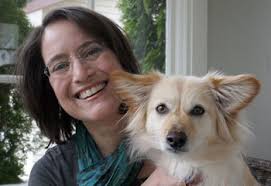
Brenda Miller and her dog Abbe (photo by Anita K. Boyle)
Q: How many submissions does BR receive in a typical month during your submission period?
A: It depends. During open submissions, between September and December of each year, we usually receive about three hundred manuscripts a month. During our contests, between December and March, we’ll receive a little more.

Q: What happens when a manuscript is received at BR?
A:  We’re now encouraging authors to submit their work via an online submission program, Submittable, so it is automatically logged in to the genre readers’ mailbox.  The readers, read several pieces a week and write notes about them and assign them to the genre editors, who also read every piece that is submitted. Those they feel are publishable, or that have merit, are then submitted to me with their rationale. I then read those pieces and choose the ones we will publish. I will sometimes write to an author and ask for revisions before guaranteeing publication.

Q: What percentage of submissions are rejected after just one reading?
A: Probably about ninety percent of the work we receive is rejected after one reading.

Q: What are the most common reasons a manuscript is rejected?
A: The first page of a prose piece needs to be perfect, and it needs to grab our attention (in a good way). If the first page has awkward sentences or typos, or starts with an explicit, offensive scene, it will be rejected. If it starts with clichéd descriptions, it will be rejected. If it is about a time-worn theme, without evidence that the author has found an original form or voice for this theme, it will be rejected. The same goes for poetry. The writing needs to be original, vivid, sensory, with a distinctive voice.

Q: BR has impressive names on its Editorial Advisory Board.  What does the Advisory Board do?
A: The Advisory Board had more of a role in the establishment of the journal and its transition to the university. Now they do not have a real formal role in the running of the journal.

Q: BR recently came out with its first online issue.  Can you talk about the differences between editing a print journal and editing an online journal?
A: It’s very exciting to have two different versions of the journal now available, as this diversity allows us to publish more work. We look for the same quality of work for each edition, and often when I decide something seems right for the online version, it’s because I can envision the perfect illustration to go along with it. The online edition allows us more leeway with graphics and illustrations than we can have in the print edition.

Q: What is the circulation of the print version? Of the online version?
A: The circulation for the print journal is about 1,200. We haven’t tracked the number of hits we’ve received in the online edition, but our hope is that the online work reaches an even larger audience. We are going to be adding a podcast and enhancing the design of the online edition next fall.

Q: What separates BR from other literary journals?
A: I’d say it’s the consistent voice we’ve developed, though my editorial staff changes every year. If you read several issues, you can “hear” how our contributors are all quite diverse, but all seem to approach their material with a compelling blend of reverence and irreverence.

Q: Who are BR's readers?
A: Most of our readers have contributed to our three literary contests: The Annie Dillard Award in Creative Nonfiction; the Tobias Wolff Award in Fiction; and the 49th Parallel Poetry Award.  Since they receive a subscription with their contest entry fee, the majority of our subscribers have submitted to our journal in the past. So our audience is made up mainly of other writers.

Q: How does BR or any academic-based literary journal reach beyond people in the "field" of creative writing?
A: We’re always looking for ways to do that. We donate copies of our magazine to schools and shelters. We’ve had a poem from our magazine read on the air during a baseball game! But I think our primary role will always be to provide publishing opportunities for creative writers, a way to showcase their work and enhance professionalism.

Q: How do you balance your work as a writer with your work as an editor and professor?
A: It’s not easy! I do most of my new writing on writing retreats when school is not in session, and then revise and send out work during the school year. I write with my students to keep my writing mind going.

Q: Could you talk about the different skills required in writing, editing, and teaching?
A: In writing, I need to get very quiet and listen. In editing, I need to get very judgmental. In teaching, I need to be compassionate.

Q: As a writer, you specialize in non-fiction and have said in interviews that you weren't so good at writing fiction, especially plot.  Can you talk about the strengths needed for writing fiction and non-fiction?
A: For me, my strengths come from my poetry background; that is, I relish in language and imagery, in metaphor and connection. My essays can be quite fragmented, held together by shimmering threads. While some fiction can also work this way, my strengths are in revealing my own vulnerabilities through these kinds of lyric structures. Fiction has a different purpose, it seems to me.

Q: Does a short story really need a plot?
A: No, but it does need something that keeps it moving forward. As does nonfiction.

Q: Would you agree that contemporary readers are more interested in "real life" than in fiction and if so why?
A: Not necessarily. Fiction still sells really well.

Q: Can you explain what "creative non-fiction" is?
A: Well, I’ve written a whole book on the topic (Tell it Slant), but the nutshell version would be that creative nonfiction roots itself in fact, but uses imagination, memory, metaphor, scenes, and literary forms to enhance fact into literature.

Q: What is the biggest challenge in editing a literary journal?
A: $$$$$$$!