Showing posts with label Poetry. Show all posts

Tuesday, March 17, 2015

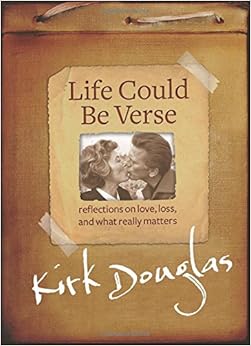
TCR on Films -- "Life Could Be Verse: Reflections on Love, Loss, and What Really Matters" by Kirk Douglas

In Life Could Be Verse, a brief and often affecting volume, actor Kirk Douglas, who recently turned ninety-eight years old, shares poems he has written over the course of his long life and recounts the experiences that inspired the verses.

Kirk wrote his first poem -- about a sailing ship, though he had never seen the ocean -- for an English class assignment as a high school student in upstate New York back when he was still Issur Danielovitch, the child of impoverished Russian Jewish immigrants. He discovered that versifying helped him better understand his thoughts. "Throughout my life I have written poems that express my true feelings," Kirk explains in the book's acknowledgments.

The poems are simple but perceptive reflections set in singsong rhyme and might be called wise doggerel. Here are the opening lines from "Luck" -- They call it 'luck'/It can't be taught/It can't be borrowed/It can't be bought'. Kirk's movie stardom, though discussed in the book, takes a back seat to his roles of son, husband, father, and grandfather.

.

Monday, March 3, 2014

Seven American Deaths and Disasters (An Interview with Poet Kenneth Goldsmith)

Seven American Deaths
and Disasters
In Seven American Deaths and Disasters, conceptual poet Kenneth Goldsmith offers transcriptions of genuine, as-it-happened radio and television news coverage of seminal events in recent American history: the assassinations of John and Robert Kennedy, the murder of John Lennon, the explosion of the Space Shuttle Challenger, the 9/11 terrorist attacks, and the death of "king of pop" Michael Jackson. Additionally, there is a chilling text taken from an FBI file of an emergency call made by a teacher cowering with her students in the Columbine High School library as prowling gunmen approach the library doors.

Goldsmith is a proponent of "uncreative writing" that retextualizes, reframes, and recycles existing material. He has added nothing to the content of Seven American Deaths and Disasters, which was recently published by New York-based powerHouse Books. His contribution is the concept itself plus careful selection and editing.

"What constitutes the act of writing is rapidly changing in the digital age," Goldsmith explained to The Committee Room. "Skills that we used to consider outside of the scope of writing — word processing, databasing, recycling, appropriation, intentional plagiarism, identity ciphering, and intensive programming, but to name a few — are now the ways we routinely construct literature."

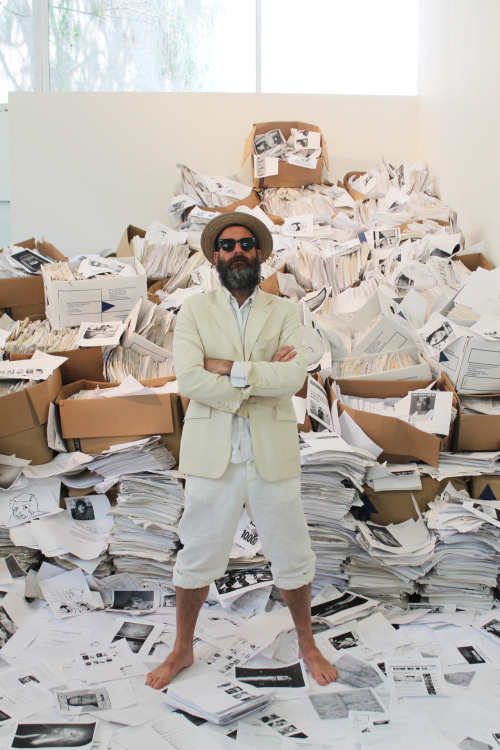
Kenneth Goldsmith
Goldsmith's earlier works include Fidget (2000), a chronicle of every movement of his body over a thirteen hour period, Day (2003), a transcription of a New York Times issue from an ordinary day in 2000, and Printing Out the Internet (2013), a crowdsourced project that invited the public to print out pages of the internet and send them to a Mexico City art gallery to be added to an installation. Ultimately, ten tons of paper was collected.

Thursday, December 12, 2013

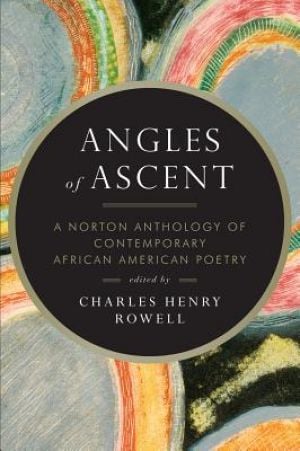
TCR Recommends -- "Angles of Ascent: A Norton Anthology of Contemporary African American Poetry" (An Interview with Editor Charles Henry Rowell)

The Committee Room recently spoke with Charles Henry Rowell, editor of Angles of Ascent: A Norton Anthology of Contemporary African American Poetry. Critics have called Angles of Ascent, which was published by W.W. Norton earlier this year, "monumental...an enormous and solid bequest to readers of American poetry" and a "a must-have powerhouse poetry anthology."

The anthology focuses on poems created in the last thirty years. "I wanted to give readers a cross-section of what I consider as the representative literary poetry that African Americans are now producing," Rowell explained to The Committee Room.

In order to provide a clearer understanding of what makes contemporary African American poetry different from what went before it, Angles of Ascent offers a sampling of earlier works by poets Rowell calls the "Precusors", including Gwendolyn Brooks, Amiri Baraka, Audre Lorde, and Robert Hayden.

Poet Amiri Baraka, a "Precursor."
(photo by Newark Mosaic)
The title of the anthology comes from a line in Hayden's poem "For a Young Artist." Rowell told TCR that he hopes "that new and emerging writers will read the contemporary poets—poets who began the main of their writing and publishing since the 1980s—in Angles of Ascent as exempla of what is necessary to do with literary traditions: with a critical eye and ear to pick and choose what to use or discard...Whatever you, as artist, choose, you, like the contemporary poets in the anthology, should try to extend, refine, or remake it, in your own voice, or reshape it in terms of your own vision as a necessary voice in your time."

Friday, May 24, 2013

Update on TCR Story of the Month Author Holly Thompson: The Language Inside

Delacorte/Random House has just published The Language Inside, a new novel by Holly Thompson whose fine story "Mentos" was TCR Story of the Month for March.

Intended for young adult readers, The Language Inside tells the story of Emma, an American teenager brought up in Japan, who goes to live with her grandmother in a New England industrial town while her mother undergoes cancer treatment.

To help ease her longing for Japan, the country she considers home, Emma volunteers at a local healthcare facility where she assists Zena, a stroke patient. Zena suffers from locked-in syndrome, a condition which has left her mentally active but physically paralyzed and unable to speak.

Tuesday, April 23, 2013

TCR Poem of the Month for April: "Chaplinesque" by Hart Crane

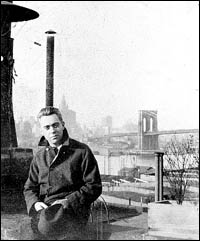
Hart Crane
The Committee Room offers "Chaplinesque" by Hart Crane as TCR Poem of the Month for April. Hart Crane has been called a Modern Romantic who strove to refresh the poet's kinship to the shaman and the seer. In his short career, Crane followed the tradition of Walt Whitman by attempting to capture the range of American experience in his poetry.

Born to a wealthy family in Ohio in 1899, Crane eschewed higher education to pursue what he believed was his destiny to be a poet. He moved to New York City and had his work published in small magazines. His exuberance and good looks, along with his writing, soon established him as an up and coming figure on the literary scene.

Tuesday, March 5, 2013

TCR Poem of the Month: "Poem [Lana Turner has collapsed!]" by Frank O'Hara

Frank O'Hara, c. 1965
(Photo by Richard O. Moore)
The Committee Room begins its TCR Poem of the Month feature with "Poem [Lana Turner has collapsed!]" by Frank O'Hara.

O'Hara was a leading figure in the New York School, a group of poets living in New York in the 1950s and 1960s who valued spontaneity and outward-looking personal expression over polished technique and tortured emotional confessions.

According to O'Hara biographer Brad Gooch in City Poet: The Life and Times of Frank O'Hara, O'Hara was inspired by a tabloid newspaper headline when he wrote "Poem [Lana Turner has collapsed!]" on a snowy evening in February 1962 while riding the Staten Island Ferry. Thirty-five years old and a poet of rising reputation, O'Hara was on his way to a reading he was to give at Staten Island's Wagner College. At the reading, O'Hara shared the newly written poem with an appreciative audience. Scheduled to read for twenty minutes, O'Hara read for an hour, much to the annoyance of his co-presenter, the somewhat older and more eminent Robert Lowell, whose poetry epitomized the confessional style that O'Hara disdained. When Lowell finally began his set he announced he would be reading for only a few minutes and facetiously apologized for not having written a poem on the spot.

Thursday, April 12, 2012

Poetry Podcasts for National Poetry Month

Poetry is best appreciated when read aloud, especially so when read by the poets themselves. Present-day technology has brought forth a wealth of opportunities to hear the voices of poets past and present.  A superb source of poetry read by the poet is The Poetry Archive which offers the voices of classic poets going as far back as Browning and Tennyson (yes, really!) along with contemporary poets and everything in between.

The Poetry Archive came into being as a result of a meeting, in a recording studio, between Andrew Motion, soon after he became U.K. Poet Laureate in 1999, and the recording producer, Richard Carrington.  Its mission statement reminds us that "poetry was an oral art form before it became textual. Homer's work lived through the spoken word long before any markings were made on a page. Hearing a poet reading his or her work remains uniquely illuminating. It helps us to understand the work as well as helping us to enjoy it. When a poet dies without making a recording, a precious resource is lost for ever and as time goes by that loss is felt more and more keenly. What would we not give to be able to hear Keats and Byron reading their work?"

To reach The Poetry Archive click here

These are other excellent sources of poetry aloud --

The Poet and the Poem (Library of Congress)

Poem of the Day (Poetry Foundation)

The Poetic Voice (Houghton Mifflin Publishers)

Classic Poetry Aloud (PodOmatic)

Poets.org (The Academy of American Poets)

PEN Podcasts (PEN American Center)

Monday, December 19, 2011

TCR Literary Journal Series Begins Soon

The Committee Room is pleased to announce its Literary Journal Series will begin soon.  The series will offer fresh, original interviews with editors and staff members of literary journals -- both print and online -- to get their first-hand views on finding and presenting quality prose and poetry in the 21st century.

Each entry in the series will focus on a particular journal.

Turn to The Committee Room to help expand your world.

Tuesday, December 13, 2011

TCR Publishing Series: Gival Press


The Committee Room begins its series of articles on publishing with a look at the Gival Press.  Founded in 1998 and based just outside Washington, DC, Gival's focus is on publishing high quality literary works in English, French, and Spanish. Gival also sponsors fiction and poetry contests and the literary journal ArLiJo.

Gival's founder and chief Robert Giron recently sat down (figuratively speaking) for an interview with TCR.


Eighteen Questions for the Head of a Small Publishing House

Q: Why did you want to start a small press?
A: The idea begin back in 1980 when I translated a Mexican poet's poetry collection; I tried unsuccessfully to find a publisher for it. I left El Paso in 1981 with the idea of one idea starting a press; this did not happen until 1998 but after I had taken courses in publications management and after working as an editor.

Q: What does Gival mean?
A: I made up the name with the first two letters of Giron, but I wanted a word that could be pronounced in English, French, and Spanish, which it can. Later on, I discovered that there are streets in France and Israel with the name.


Q: Can you explain Gival's bird symbol?
A: The thunderbird is a major icon in the Southwest Indian tribes and the triangle (three is a magical number) in the logo is pointing downward--from the heavens to Earth. The triangle is important because during  WWII gay men had to wear a pink triangle while in prison. The wings go outward to encompass the words Gival Press, like the global scope of the press.

Q:What experience did you have in publishing?
A: I took classes at George Washington University and worked an as independent contractor and editor for publications in Washington, DC. This was after I had taken courses in creative writing at the University of Texas at El Paso before moving to Washington in 1983.

Q: What were the biggest challenges in getting started?
A: The publishing industry has changed since 1998 and while we have been small we have been able to keep it small and change quickly and prepare for what is happening in the publishing industry. The major publishing companies of New York are just now finally catching up but Amazon.com is quickly changing the future of publishing.  That plus keeping the cash flowing in to keep up with the expenses. Fortunately, I have been able to invest heavily in the business which has kept it going.

Q: How many people work for Gival?
A: We are a small independent press. I'm the main person and I hire independent contractors to do: the book design, editing, distribution, and reviewing, etc.

Q: Gival's guidelines state that "we publish work that has a social or philosophical message."  Could you elaborate on that?
A: We want works that are truly well written but I also want the work to have a purpose other than to simply entertain but this purpose should not be didactic. The story and the characters are the important elements but how one tells the story makes the purpose clear without hitting someone over the head with a frying pan.
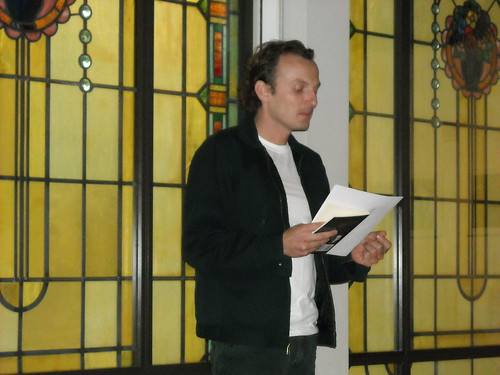

DSCN1494
Poet John Gosslee reads in Gival Press event at
 Arlington (VA) Arts Center, October 2011
Q: Can you tell us some of Gival's current titles?
A: In Fall 2011 we have the following coming out:

Fiction: The Winner of the Gival Press Novel Award, Gone by Sundown by Peter Leach, which is about towns in Missouri which would routinely force "colored" people out of the town during the Depression.

Fiction: Show Up, Look Good by Mark Wisnieswki about a Midwestern woman who moves to New York City and survives post 9/11.

Fiction: The Pleasuring of Men by Clifford Browder about a young man in the 1890s who goes into male prostitution to survive in New York City.

Poetry: The Silent Art, Winner of the Gival Press Poetry Award by Clifford Bernier, a collection centered around jazz. 12: Sonnets for the Zodiac by John Gosslee in English, French, and Spanish.

DSCN1493
Poet Clifford Bernier reads in Gival Press event at
Arlington (VA) Arts Center, October 2011
Q: Gival's Poetic Voices Without Borders 2 won the 2009 National Best Book Award for Fiction and Literature Anthology from USA Book  News.  Can you tell us something this anthology?
A: I wanted to have a collection that was trilingual, so this has poems in English mostly, but also in French, and Spanish. In addition, it has the winners of the Gival Press Oscar Wilde Award for the best poem about GLBT life. This has done well.

Q: How many copies do Gival books usually sell?
A: This varies per book and title. Poetry varies from ten to one-hundred. Fiction from twenty to four-hundred.

Q: How many titles do you publish per year?
A: Usually about four per year; six in 2011

Q: What have been Gival's biggest sellers?
A: As a literary press, we haven't had a NY-type "hot seller" but certainly the memoir by Elis Avery titled The Smoke Week about 9/11 has sold well. Another good seller has been Maximus in Catland by David Garrett Izzo about a cat that saves the world--great for cat lovers and science fiction.

Q: Gival sponsors four annual contests -- a novel contest, a short story contest, a poetry volume contest, and a single poem contest.  What benefits are derived from running a contest?
A: We see lots of mss from a variety of authors: both established and emerging writers. This is the most interesting aspect of publishing for me. The excitement comes through in the work but as an educator I often have to teach the emerging authors the business sort of speak. The contests also put the name of the press out there and as a result we have gotten many well known authors.

Q: What happens when a manuscript is received at Gival?
A: Prior to the Wall Street crash in 2008, we used to have an open reading period for poetry and fiction, but we have not opened it up again. In truth, because we get so many good mss via our novel award and poetry collection award (both annual contests), there are many mss which do not win which we would like to publish. In fact, we have published some that didn't even place as a finalists. I keep notes of those mss I feel have potential and have gotten in touch with authors after the contests. With these mss, I certainly have little time to seek out others; nonetheless, authors do contact us and we ask only those we are truly interested in to send us their ms for our consideration.

Q: Gival recently started an online journal ArLiJo. Why?
A: After we stopped the open reading period, I wanted to give authors a venue for getting their work out there and to help create an audience for them. ArLiJo, which stands for the Arlington Literary Journal Online, costs little to sponsor via Gival Press and it gives authors a link to an established press. Some of these authors we have published or have gone on to publish. Payment for online publication on ArLiJo is any book published by Gival Press.

Q: What are the distribution channels for Gival Press books?
A: We distribute books via BookMasters in Ohio and they have contracts with Ingram and other outlets for bookstores, etc. Plus we sell books on Amazon.com and BarnesandNoble.com. In addition, we now sell Nook and Kindle ebooks. Before Nook and Kindle, we used to have ebooks with Booksurge.com but it was bought by Amazon.com and then the industry changed. We waited to see how the ebook industry was going to do before we entered it again. Now we make all books available as softcover and Nook and Kindle ebooks.

Q: What are the biggest challenges in keeping a small press going?
A: Keeping up with the changes in the industry and maintaining quality and making sure all the bills are paid.

Q: What advice would you give someone interested in starting a small press?
A: Think twice about doing it. Keep your day job (unless you have tons of $$$ you can put into the press) and learn about the industry. You have to love what you do and have a commitment to work day and night and weekends, knowing that many may not acknowledge you or appreciate what you do, but somewhere there are folks who do and once in a while they tell you in person or via email and that makes all the difference.  Then I know that what I believe in has changed someone's life for the better--going back to the mission we created for Gival Press, to publish works that have a message and that have the power to change lives, even if in the the smallest way for as it goes this accumulates like a snow ball and rolls into a huge boulder that will affect the globe.  Remember our outreach is global not just the USA. In fact, I jokingly say the universes.