Showing posts with label Movies. Show all posts

Tuesday, May 16, 2017

TCR Celebrates National Classic Movie Day, May 16.


The Committee Room wishes you a Happy National Classic Movie Day! To celebrate classic movies, TCR is taking part in the Five Stars Blogathon, hosted by Classic Film and TV Cafe.

Five Stars Blogathon participants list five of their favorite classic-era stars and offer a brief explanation as to why these stars are favorites. In putting together its list, TCR chose to move past stardom's top, instantly recognizable folks (the level depicted in the illustration above) and give a nod to five less exalted but highly deserving performers. Perhaps reflecting their B list status, all of TCR's favorites may be best known more for their work on television than on the big screen.


Monday, May 15, 2017

TCR on Film: An Interview with Mark A. Vieira, author of "Into the Dark -- The Hidden World of Film Noir, 1941-1950."

In the excellent new book Into the Dark: The Hidden World of Film Noir, 1941 -1950  (Running Press, 2016) veteran author Mark A. Vieira uses first hand accounts to take readers back to the 1940s. Instead of latter day critical analysis, we get reviews and comments from the film noir era along with the reminiscences of performers, including noir specialists Jane Greer and Claire Trevor, and other personnel who were part of the film noir world.

"I determined that film noir truly began in 1941 by reading Los Angeles Times articles of the period," Vieira explained to The Committee Room. "They cited Citizen Kane and The Maltese Falcon as the first of the 'hard-boiled' trend."

As Vieira points out in Into the Dark, the term film noir was unknown to those who made these films. The term was coined by a French critic in 1946 to describe the large number of crime thrillers and murder dramas coming out of Hollywood but did not come into general use until the 1970s when these stylish films were rediscovered by a new generation of critics and moviegoers.

Thursday, March 2, 2017

TCR on Film: "Unsinkable: A Memoir" by Debbie Reynolds

In tribute to the late Debbie Reynolds, one of the last stars produced by the old Hollywood studio system, The Committee Room takes a look at her memoir Unsinkable (William Morrow, 2013).

In the preface to Unsinkable, Reynolds mentions her first book, Debbie: My Life (William Morrow, 1988), written when the actress was in her fifties and, it would seem, still had a lot of living left to do.  "I can't believe how naive I was when I wrote it," Reynolds in Unsinkable says of the earlier book. She explains that at the time she was writing the first book she was in what she believed was a happy marriage to her third husband, a Virginia real estate developer named Richard Hamlett.

In Unsinkable, Reynolds offers a detailed portrait of Hamlett as a handsome, smooth-talking scoundrel who, she maintains, cold-heartedly entered into marriage with the intention of swindling her. The first third of the book is Reynolds' painstaking and angrily told account of how Hamlett's unscrupulous behavior led to the bankruptcy of her Las Vegas hotel, a venture which she hoped would provide a regular venue for her talents along with a steady income. Consequently, in Unsinkable there is much talk, perhaps too much talk, of lawyers and property deeds and promissory notes.

Thursday, October 13, 2016

An Interview with Brian Kellow, author of "Can I Go Now? The Life of Sue Mengers, Hollywood's First Superagent."

Superagent Sue Mengers. Do any other three words better conjure up the enormous energy, creativity and free-wheeling social life of Hollywood in the 1970s?

Mengers is the subject of an excellent new biography Can I Go Now? The Life of Hollywood's First Superagent by Brian Kellow. The title of the book comes from Mengers' passive-aggressive way of ending phone conversations.

Kellow's previous work includes books on Broadway legend Ethel Merman (Ethel Merman: A Life, 2007) and film critic Pauline Kael (Pauline Kael: A Life in the Dark, 2011). He was also on the staff of Opera News for many years.

The idea of writing a biography of Mengers came to Kellow from his own (literary) agent. At first Kellow was skeptical, thinking that there wasn't enough substance in the life of Sue Mengers to warrant a biography. "My last book had been a biography of Pauline Kael, and I was very keen to follow it up with another biography of a writer," Kellow told The Committee Room. "To write a book about an agent seemed like a questionable project, especially after having written about someone as complex and brilliant as Pauline. But I was wrong: Sue was complex and brilliant in her own right, and once I began the research, I knew that this was a great topic. It was also a wonderful opportunity to write about the films and stars and filmmakers of the late '60s, the '70s and early '80s--still, to my mind, the most stimulating era in American movie-making."

Monday, October 26, 2015

TCR on Show Business: "Judy + Liza + Robert + Freddie + David + Sue + ME" by Stevie Phillips

"What is an agent?" asks Stevie Phillips in her recently published memoir Judy + Liza + Robert + Freddie + David + Sue + ME  (St. Martin's Press). Phillips knows the answer. She was once among the most powerful talent agents in the entertainment industry, having shepherded Liza Minnelli and Robert Redford to superstardom.

"An agent is a fraud, but a fraud with good intentions...someone totally willing to sublimate herself to be the person the client wants her to be. Do you want me to be angry on your behalf? Here I am. Do you want me to be docile for you? Here I am. But regardless of what role-playing takes place, an agent must always maintain integrity and never lead a client knowingly in the wrong direction," Phillips writes.

Unlike the legendary agent Irving "Swifty" Lazar, whose Oscar night parties were the height of Hollywood A-list gatherings. or the world class schmoozer Sue Mengers, such a big personality that she was brought back to life in 2013 by Bette Midler in the one-character Broadway play I'll Eat You Last and is the subject of a just published biography (Can I Go Now? by Brian Kellow) Phillips never became more famous than a lot of her clients. Her stock in trade was cool, calm, behind the scenes efficiency.

Tuesday, June 2, 2015

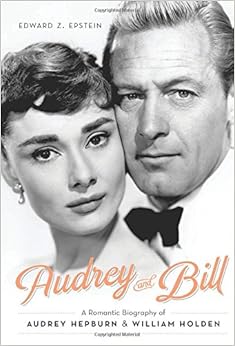
TCR on Film: An Interview with Edward Z. Epstein, author of "Audrey and Bill: A Romantic Biography of Audrey Hepburn and William Holden"

In Audrey and Bill: A Romantic Biography of Audrey Hepburn and William Holden, just published by Running Press, veteran film journalist Edward Z. Epstein creatively uses the personal relationship between Hepburn and Holden as a starting point for a wider look at how these two very big stars of the 1950s maneuvered through the changes that came to their lives and to the film industry in the 1960s and beyond.

"Both stars are charismatic screen personalities, favorites of mine, and I’d thought for a long time about writing a book on the largely untold story of their romance," Epstein, who is the author of numerous books on film subjects including Paul Newman, Clara Bow, and Marlon Brando, told The Committee Room. "As New York press contact for MCA/Universal, I worked with many people, over the years, who knew both Audrey and Bill, and who were familiar with the problems they faced and the pressures of the business they were in."

Today Hepburn is an icon recognizable even to those not so familiar with her film work. Holden, though he had a much longer career than Hepburn and his once tremendous box-office clout earned him the nickname "Golden Holden," has not been so well remembered.


Tuesday, February 10, 2015

TCR on Films: "Watch Me: A Memoir" by Anjelica Huston

In the recently published Watch Me: A Memoir, actress and sometime director Anjelica Huston picks up where she left off in her first book, A Story Lately Told: Coming of Age in Ireland, London and New York (discussed in TCR in April 2014).

At the start of this second volume Huston is in her early twenties and has just arrived in Los Angeles. She has been a successful fashion model in Europe and New York but is eager to commence a new life in sunny SoCal after finally extrapolating herself from a difficult relationship with a mentally ill photographer old enough to be her father.

Anjelica is a new girl in town but, being the daughter of legendary film director and bon vivant John Huston, she is an extremely well-connected one. It isn't long before she meets rising star Jack Nicholson and they begin a lengthy reign as Hollywood's coolest couple. Woody Allen immortalized their partnership in Annie Hall in which Annie's acceptance by the in-crowd is represented by her being invited to a party at Jack and Anjelica's.

Jack and Anjelica are an unequal pair. Nicholson essentially replaces John Huston as the charismatic, energetic and famous man dominating over Anjelica's life. As Jack ascends to superstardom in Chinatown, One Flew Over the Cuckoo's Nest, and The Shining, Anjelica hangs around and smokes -- sometimes on Jack's movie locations, sometimes back home at Jack's house on Mulholland, sometimes at the homes of friends in Paris, London, New York, and Aspen.

Wednesday, July 9, 2014

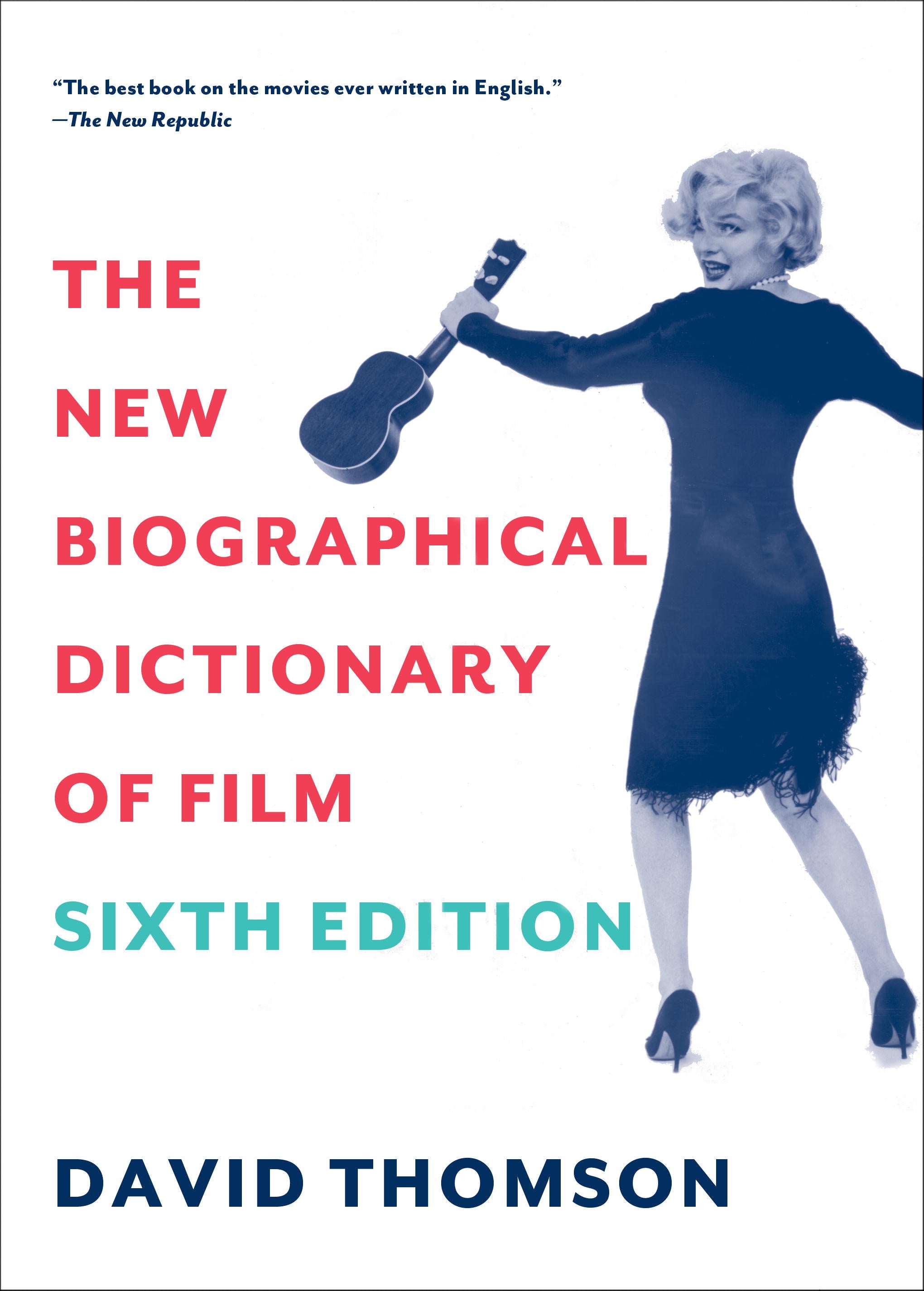
TCR Recommends: "The New Biographical Dictionary of Film" (Sixth Edition) by David Thomson

David Thomson has been writing and publishing books, essays, and reviews on film for nearly half a century. His quirky, highly subjective style can infuriate but he is so deeply knowledgeable that he never fails to hold one's attention.

"Witty, expansive, convincing, honest, more than a little mischievous and, so often, absolutely on the money, Thomson’s voice is one of the most distinctive and enjoyable in film criticism," says Benjamin Secher in The Telegraph.

A sixth edition of Thomson's best known work, The New Biographical Dictionary of Film, was recently released by Knopf. In the introduction to the sixth edition, Thomson writes -- "Opinion can be emphatic, self-indulgent, cruel, tasteless -- and at times this book has suffered in those ways. But it can be creative, provocative, the start of a conversation." Thomson has mellowed and says that he no longer believes (as he did when writing the first edition of the Biographical Dictionary, published in 1975) that "not only must one like the right films but one must also like them for the right reasons" but the book remains a "mechanism for alerting you to films you have not seen and may never have heard of."

Dana Stevens of Slate calls The New Biographical Dictionary of Film the "book every movie lover should own" but warns that it is "the most idiosyncratic and deeply personal of a filmgoer’s journals masquerading as a reference work."

Wednesday, January 16, 2013

Bestsellers List Revisited: Holiday Season 1952-53 (part 2): Tallulah Tells Her Story

First edition, 1952
The Committee Room continues its look back at the holiday season bestsellers of sixty years ago. TCR's last posting discussed East of Eden by John Steinbeck which was number one on the New York Times bestselling fiction list. We turn now to non-fiction. At the top of the Times list was My Autobiography by the legendary actress Tallulah Bankhead.

Published by Harper and Brothers, Bankhead's My Autobiography settled into the number one spot in October 1952 and stayed there through the Christmas and New Year's 1953 season. Other titles in the non-fiction top ten at this time were The Sea Around Us by Rachel Carson, which had been on the list for over a year, and Anne Frank: The Diary of a Young Girl by Anne Frank.

At the time of My Autobiography's release, Bankhead was fifty years old and experiencing a career boost as one of the hosts of The All Star Revue, a highly touted television variety show, on NBC. She had moved to television after two years of hosting The Big Show, a prestigious NBC radio variety program. Bankhead's gift for witty repartee was used to good advantage in variety show introductions though guests on the programs often approached her with trepidation, knowing her unpredictability.

Paperback, 1953
According to biographer Denis Brian, Bankhead began tape recording her life story in the summer of 1951 at her Bedford Village, New York home. The transcribed tapes of Bankhead's anecdotal, name-dropping (often of personalities now forgotten) and selectively revealing reminiscences were organized and edited by leading show business press agent Richard Maney. At the opening of My Autobiography Bankhead offers a "Citation to Richard Maney for Conduct Above and Beyond the Call of Duty" but doesn't specify what he did.

Born in Alabama in 1902, Bankhead won a beauty contest as a teenager which led to an acting career. In the early 1920s, after a few small roles in the New York theater, she got a part in a British stage production. In London she quickly gained notoriety for her flamboyant, eager to shock behavior off-stage as much as for her acting in plays such as Sidney Howard's They Knew What They Wanted.